Source Waterproof Outdoor Led Driver for Lighting, Construction, and Industry
Find 30 waterproof outdoor led driver options with IP67 ratings and various power outputs. Compare specifications for models like YSC50 and SMV-250-15, featuring constant current or voltage sources, to meet diverse lighting and industrial application needs; compare the available evidence and request quotations based on your requirements.
Key considerations
Products List




Comprehensive Sourcing Guide
Waterproof Outdoor LED Driver Sourcing Guide
Selecting the right waterproof outdoor LED driver requires balancing electrical performance with environmental resilience. Buyers must prioritize ingress protection ratings and thermal management to ensure longevity in harsh conditions. This guide outlines critical verification steps for sourcing reliable components that meet rigorous industrial and commercial standards.
Procurement teams should focus on verifying input voltage ranges, output configurations, and modulation systems. Understanding the distinction between constant current and constant voltage drivers is essential for matching the power supply to specific LED array requirements. Proper selection prevents premature failure and ensures consistent light output across diverse operational environments.
Product Scope and Observed Listing Signals
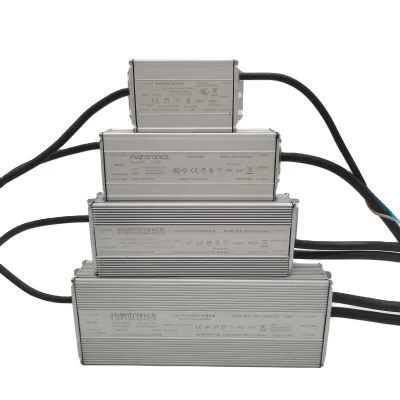
The current market offers a diverse range of waterproof LED drivers with varying power outputs and form factors. Listings indicate models such as the YSC50 and SMV-250-15, which cater to different wattage requirements from low-power applications to high-intensity lighting systems. These products often feature compact dimensions, such as 235x120x55mm or 200x68x43mm, allowing for easy integration into tight housing spaces.
Observed specifications reveal a focus on durability and efficiency, with many units boasting IP67 ratings to withstand dust and water immersion. Buyers will notice variations in weight, ranging from 1.1kg to 2.8kg, which can impact shipping costs and installation logistics. The presence of customization options suggests that suppliers are willing to adapt packaging and technical parameters to meet specific project needs.
Technical Specifications to Verify
Verify the driving method to ensure compatibility with your LED load, as options include LED constant current or regulator voltage modes. The modulation system, often PWM controlled, affects dimming capabilities and efficiency, so confirm that the driver supports the required control signals. Input voltage ranges typically span AC85-264V, providing flexibility for global deployment, but always check the specific frequency tolerance of 47-63Hz.
Output specifications must align precisely with your LED string requirements, such as 15V at 16.7A or 24V at 4.2A. Efficiency ratings around 86% and tolerance levels of 1% indicate high-quality performance, reducing energy waste and heat generation. Additionally, confirm the working temperature range, typically -25°C to +50°C, to ensure reliable operation in extreme outdoor climates without thermal shutdown.
Compliance and Safety Documentation
Ensure that all selected drivers carry recognized safety certifications such as CE, RoHS, UL, TUV, and CCC. These certifications verify that the product meets stringent electrical safety and environmental standards, reducing liability and ensuring market access in regulated regions. Documentation should explicitly reference standards like EN60950, UL60950, and GB4943 for additional safety assurance.
Check for ISO9000 quality management certification to confirm the supplier’s manufacturing consistency and process control. Proper labeling and documentation are crucial for customs clearance and end-user safety compliance. Buyers should request test reports and certificates of conformity to validate that the products meet the declared standards before placing large orders.
Cost Drivers and Commercial Terms
Pricing for waterproof LED drivers varies based on power output, certification levels, and order volume. Observed price ranges span from $2 to $29.60, reflecting differences in component quality and feature sets. Minimum order quantities (MOQ) typically range from 1 to 1000 units, allowing for flexible procurement strategies for both small projects and large-scale deployments.
Consider the total cost of ownership, including packaging and shipping. Products are often packed in export cartons or standard boxes, with bulk packaging options like 24 pieces per 26.5kg carton. Negotiating volume discounts and clarifying warranty terms, such as a standard two-year coverage, can significantly impact long-term procurement costs and risk mitigation.
Supplier Qualification and Quality Control
Assess supplier capabilities by verifying their origin and production standards, with many manufacturers located in regions like Ningbo and Wenzhou, China. Request samples to test physical attributes, including size, weight, and build quality, before committing to bulk orders. A robust quality control process should include incoming material inspection and final product testing.
Evaluate the supplier’s ability to provide customization, such as specific packing configurations or technical adjustments. Clear communication regarding lead times and after-sales support is essential for maintaining supply chain stability. Ensure that the supplier has a proven track record of delivering consistent quality and adhering to agreed-upon specifications.
Long-Term Procurement Checks
Establish a routine for monitoring product performance and supplier reliability over time. Track failure rates and warranty claims to identify potential quality issues early. Regularly review certification status to ensure continued compliance with evolving international safety and environmental regulations.
Maintain open communication with suppliers to stay informed about product updates and technological advancements. Periodically re-evaluate your sourcing strategy to ensure that you are getting the best value for your investment. Building a strong partnership with qualified suppliers can lead to better pricing, priority support, and access to innovative solutions.
FAQs
What certifications do waterproof outdoor led drivers have?
These drivers typically hold CCC, CE, RoHS, UL, TUV, and GS certifications. The listed products confirm compliance with international safety standards like ISO9000 and specific regional requirements to ensure reliable operation in outdoor environments.
Which output capacity is available for 250W models?
A 250W model provides an output of 15V at 16.7A. This specific configuration supports high-power applications while maintaining stable performance within the specified operating temperature range of negative twenty-five to positive fifty degrees Celsius.
Can I find drivers with IP67 protection rating?
Yes, certain waterproof outdoor led drivers feature an IP67 rating for dust and water resistance. This ensures durability in harsh outdoor conditions, making them suitable for permanent installation in exposed areas without risk of internal damage.
What is the warranty period for these power supplies?
The standard warranty period for these units is two years. This coverage protects against manufacturing defects and ensures long-term reliability for commercial and industrial lighting projects requiring consistent power delivery over extended operational periods.
How does the driving method affect performance?
The driving method utilizes LED constant current or voltage regulation via PWM control. This modulation system ensures stable light output and prevents flickering, which is critical for maintaining consistent illumination quality in various outdoor lighting scenarios.
What is the input voltage range for these units?
Input voltage ranges from 170 to 264VAC at 47-63Hz for specific models. Other variants support a broader AC85V range, allowing flexibility for different regional power grids and ensuring compatibility with diverse electrical infrastructure systems worldwide.
Are customization options available for these drivers?
Customization is available for specific product requirements and specifications. Buyers can request tailored solutions to meet unique project needs, ensuring the final product aligns perfectly with the intended application and environmental constraints of the installation site.